





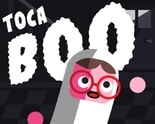
Toca Boo

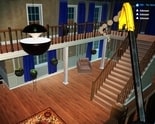


You crouch near the doorway as a couple wanders into the kitchen in Toca Boo, and the second one of them turns toward you, the sale is already slipping away from them. Hold the mouse button, drift closer, and watch the whole house tour fall apart.
| Genre | Short horror survival |
| Setting | Single-story haunted house |
| Player role | Resident ghost |
| Controls | Hold left mouse button to move |
| Objective | Scare every buyer out before the house sells |
The premise of Toca Boo is small and it stays small: a ghost, a house, and a rotating cast of buyers who will complete the tour and close the sale unless you make them leave first. Losing the house means the game ends, and that threat sits over every room you drift through.
Reading a Buyer’s Vision Range Before You Move in Toca Boo
Every buyer has a field of vision, and getting caught inside it at the wrong moment ends your approach before it starts. Toca Boo does not spell this out with a meter or a marker, so most players learn the rough edges of that vision cone by getting spotted a few times too many.
A patient player waits just outside that range, tracking a buyer’s turn before committing to a scare.
Buyers enter from both sides of the house, left and right, so a run that starts calm in the living room can suddenly have two separate tour groups moving through different rooms at once. A player who rushes in from the wrong angle usually just startles nobody and burns the attempt entirely.
Altering the Interior Instead of Just Appearing
The real trick in Toca Boo is not simply popping into view. You scare buyers away by altering the interior around them, rattling the house itself rather than relying on a jump-scare alone. That distinction is what people mean when they say the game rewards positioning over reflexes.
How you scare buyers in Toca Boo comes down to using the room against them: line up a disturbance where a buyer is already looking, then let their own attention do the work of noticing something wrong.
Some buyers shrug off a weak scare and keep walking toward the next room, which is the most common reason a run fails even when the ghost technically did everything right. That stubbornness is one of the things players bring up most when talking about the difficulty.
- Stay outside a buyer’s vision cone until you are ready to act
- Use furniture and room details rather than direct appearances
- Watch both entrances, since buyers can arrive from either side
- Expect some buyers to resist a single scare attempt
The Bat, the Camera Shake, and Other Small Details Toca Boo Gets Right
A small bat circles the property the whole time, doing nothing mechanically but making the house feel inhabited by more than just you and the buyers walking through it. It is the kind of detail you only notice after a few runs, once you stop focusing entirely on the nearest doorway.
Camera shake and sound cues fire whenever a scare lands, and that feedback is what makes a successful attempt feel satisfying rather than just a pass-fail check. Players consistently mention that punch of feedback as the best part of an otherwise short game.
None of this changes the core loop, but it is why a five-minute session sticks in people’s memory longer than most short horror games manage.
Why the House Tour Never Plays Out the Same Way in Toca Boo
Because buyers move independently and enter from different directions, no two runs unfold identically. Early in a session the house feels manageable, but once a second buyer group appears while you are still handling the first, the pace shifts fast.
Why buyers still buy the house in Toca Boo even after a scare comes down to timing: a scare that lands too late, after a buyer has already seen enough of a room, does not undo their impression of it. You have to get there before they finish looking.
A completionist player will replay the same short run repeatedly chasing a clean sweep where every buyer leaves, treating what looks like a simple game as something closer to a tight puzzle.
Toca Boo works because it trusts a tiny idea, a ghost trying to keep its own house, and lets the vision cones, the bat circling outside, and the stubborn buyers who won’t scare on the first try do the rest of the work.