














Right Click to Necromance



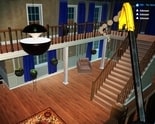





You click once, a single bone rises out of the dirt, and by the tenth click you’re already eyeing the first assistant you can afford so bones start piling up without your input. That’s the hook of Right Click to Necromance: a bones-currency incremental clicker where every resource funnels toward one goal, raising an undead army large enough to run itself while you watch the numbers climb.
| Genre | Incremental clicker |
| Currency | Bones |
| Army Units | Skeleton warriors and wizards |
| Core Mechanic | Click to gather bones, spend bones on assistants and upgrades |
Gathering Bones in Right Click to Necromance
Every session starts the same way: clicking directly to pull bones out of the ground, since there’s no passive income until you’ve earned enough for your first assistant. That early stretch feels slow on purpose, designed to make the first automated digger feel like a real turning point, and most players remember the moment their bones-per-second counter finally outpaces their own clicking speed.
Beginners commonly sink early bones into whichever upgrade looks flashiest instead of the one that actually raises passive income fastest, which stalls progress longer than it needs to. The smarter approach treats every purchase as a question of how quickly it pays for itself in bones per second. Idle-focused players who leave the tab open in the background benefit most from getting this math right early, since a bad purchase compounds into a slower economy for hours afterward.
The bones aren’t currency for currency’s sake; they’re framed as raw material for your undead army, and that framing carries through every purchase screen. Watching a pile of bones convert into a new skeleton warrior standing at attention is the small satisfying beat that keeps the loop from feeling like pure spreadsheet management.
Building the Undead Army in Right Click to Necromance
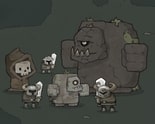
Skeleton warriors are the backbone of your growing force, cheap early units that push your bones-per-second rate up in bulk. Wizards arrive later as a pricier, more efficient tier, and swapping spending priorities toward them once they unlock is one of the clearer difficulty spikes in the game, since the bone cost per unit jumps noticeably. Players who keep dumping resources into warriors past that point tend to plateau, while players who pivot to wizards earlier see totals climb faster.
What surprises new players is how much the game rewards checking back periodically rather than clicking nonstop. Once assistants and army are generating bones on their own, active clicking becomes a smaller share of total income, and decisions shift to upgrade timing instead of click speed. That’s a divisive point in how clicker-style games get discussed generally: some enjoy the shift from active clicking to passive management, while others feel the active phase ends too fast.
A run generally moves through a few clear stages as bones-per-second climbs:
- An early clicking-only phase before your first assistant is affordable
- A skeleton warrior phase where cheap bulk units drive most income
- A wizard phase where fewer, pricier units outproduce a warrior-heavy army
- A late idle phase where checking back outpaces active clicking
Return-focused players who check in a few times a day tend to progress differently than players who click actively for long stretches, and the game doesn’t strongly punish either style. By the time your army includes a real mix of warriors and wizards, the bones-per-second number stops feeling like a stat and starts feeling like a small economy you built one purchase at a time.
How do you get your bones-per-second rate up fastest early on?
Prioritizing your first assistant purchase over cosmetic upgrades matters more than raw click speed in the opening minutes. Once that first automated source of bones is running, reinvesting into cheap skeleton warriors builds a base income floor quickly, and only after that base is established does saving for a wizard start to pay off.
When should you switch from warriors to wizards?
The moment wizards become affordable is usually the moment they’re worth the switch, since their bones-per-second output per unit outpaces warriors by a clear margin. Continuing to mass warriors past that point is one of the more common inefficiencies experienced players point out to newcomers.
Does clicking still matter once assistants are running?
Active clicking never stops contributing, but its share of total income shrinks fast once your undead army is established, which is why the game reads differently in its first ten minutes versus an hour in.
Right Click to Necromance rewards patient play, and once your first wizard joins a yard full of skeleton warriors, watching that undead army run itself becomes the whole appeal.