












Universe Sandbox 2.0






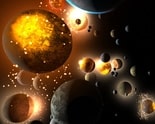
Universe Universe Sandbox 2.0 looks like a calm astronomy toy for watching planets drift in orbit, but it plays like a demolition derby where the solar system is the target and you hold the detonator. There is no mission list, no score, and no way to lose; there is only a planet, a menu of destructive tools, and however long you want to spend watching debris fall.
| Genre | Physics-based destruction sandbox |
| Setting | Planets, moons, and open space |
| Objective | None fixed; destroy planets using the available arsenal |
| Arsenal Size | More than 30 weapons |
No Goal, Just Gravity in Universe Sandbox 2.0
The first thing that throws new players is the total absence of direction. You load into a planet, usually Earth-like by default, and the game hands you a weapon wheel and nothing else. No tutorial voice tells you what to try first. That openness is either the whole appeal or the biggest early stumbling block, and it’s worth knowing going in rather than expecting a structured campaign this game was never built to provide.
What makes the emptiness work is the physics underneath it. Debris doesn’t vanish in a canned animation; fragments follow gravity, magma pools along crater edges, and a planet torn apart by a black hole spirals inward differently every time. Casual players who just want something to blow up get instant gratification from a nuke on the very first try.
Because there’s no fail state, difficulty in the usual sense doesn’t exist here. What changes with time isn’t challenge, it’s ambition: an early session might end with one nuke on Earth, while a later one has you lining up a black hole against a second planet just to see which force wins. That escalation in scale, not skill, is the real progression curve.
Reading the Weapon Wheel in Universe Sandbox 2
The arsenal is the reason people keep coming back, and it splits roughly into a few categories worth knowing before you start clicking randomly:
- Impact weapons: meteors, asteroids, and Earth’s own Moon, which barrels into a planet at constant velocity and explodes once it takes enough damage
- Explosive weapons: nukes and antimatter missiles, the latter folding inward into a blue implosion that leaves a crater comparable to a lunar impact
- Exotic weapons: black holes, which enlarge briefly before stripping away surface material and shrinking out of existence
- Novelty weapons: oversized creatures and vehicles that exist purely for the spectacle of colliding with a planet
Black holes get talked about most, since watching a planet spiral into one hits differently than a straightforward blast. The antimatter missile comes up almost as often, mostly because its implosion looks nothing like the game’s other explosions and catches new players off guard the first time.
Novelty Weapons and Why Players Keep a Favorite
Not everything on the wheel is meant to be taken seriously. Giant creatures and oversized vehicles exist purely for spectacle, and their inclusion alongside more grounded tools like gravity wells keeps sessions from feeling like a physics lecture. Ask a group of regular players which weapon they reach for first and answers split hard, itself a common thread in how the game gets discussed.
One honest criticism: a handful of mid-tier explosive options blur together once used a few times, since their end result, a cratered, smoking surface, looks similar regardless of which one triggered it. Longtime players raise this often, wishing every entry had a more clearly separate identity.
Planetary Bodies and How They React Under Fire
Not every world absorbs punishment the same way. Rocky planets crack and crater almost immediately, while gas giants swirl and destabilize rather than shatter into visible chunks. Moons, being smaller, tend to disappear or fragment faster than a full-sized planet hit with the same weapon.
Gravity ties all of this together and isn’t just set dressing. Celestial bodies genuinely pull on each other, orbits shift when you alter a planet’s mass mid-session, and chain reactions between multiple bodies happen without being scripted in advance. Nudge one body’s mass and watch a second, untouched planet’s orbit visibly bend in response.
This is where the sandbox rewards a specific type of player. Experimenters who care less about explosions and more about setting up an unstable orbit and watching gravity resolve it on its own terms get a genuinely different game out of Universe Sandbox 2 entirely.
Defensive Satellites and the Rare Restraint Play
Not every tool is built to destroy. Shields and defensive satellites protect a planet rather than tear it apart, and using them well takes a different mindset than reaching for a nuke. Setting up a defense and then attacking it, testing a planet’s resilience, is a niche but popular way to play that many newcomers never realize is an option.
Battleships, UFOs, and space fighters add another wrinkle: rather than one scripted blast, they behave like ongoing assaults, chipping away at a surface over time instead of resolving in a single dramatic hit, which stretches destruction out rather than ending it the moment it’s deployed.
Custom Solar Systems and Multi-Body Collisions
Beyond a single default planet, Universe Sandbox 2 lets you add more bodies into the same scene and adjust their mass, distance, and trajectory before anything collides. Setting two planets on a slow intercept course and letting gravity do the rest produces a genuinely different kind of destruction than any single weapon, since the outcome depends on relative mass rather than a scripted animation.
Builders who enjoy assembling a miniature system before touching a single weapon get a fundamentally different session out of the same tools. Multi-body setups can be fiddly; small adjustments to mass or velocity produce outsized results, and dialing in exactly the collision you pictured takes real trial and error.
Sound, Scale, and Community Vocabulary in Universe Sandbox 2
One detail that only shows up after enough time in the game is how the audio tracks scale rather than just punctuating explosions. Zoom in close on a detonation and the sound is sharp; pull back to a full-system view and the same event registers as a distant rumble, reinforcing how small a single explosion is against an entire solar system.
Magma is another recognizable signature: molten material genuinely pools at crater edges and cools unevenly, so a planet cracked open minutes ago still looks different now. Community vocabulary leans on shorthand for these moments, calling a cratered world “cooked” or describing a black hole’s pull as getting “sucked,” none of it official, just what shows up once players compare notes.
What Players Argue About in Universe Sandbox 2
- Can you actually destroy the Sun in Universe Sandbox 2? Yes, though it takes stacking the more extreme tools rather than any single weapon, and unraveling a star looks different enough from planet destruction that many treat it as a separate goal entirely.
- Is there any way to lose or fail in Universe Sandbox 2? No; there is no fail state built into the sandbox, which is by design and part of why the game gets recommended as a stress-free way to blow off steam.
- Which weapon does the most visible damage the fastest? Black holes and antimatter missiles both produce dramatic, near-instant results, though a black hole’s slow pull tends to feel more satisfying because of how differently it behaves from a straightforward blast.
The debate that comes up most isn’t about any single weapon; it’s whether the lack of objectives is a strength or a missed opportunity. Sandbox purists argue that adding goals would ruin what makes the game work, while a vocal minority wishes there were optional challenges layered on top of the destruction toolkit. Both positions show up constantly, and neither side is really wrong.
What ties it together, whether you nuke Earth in the first ten seconds or spend an hour nudging orbital mechanics before touching a single weapon, is that Universe Sandbox 2.0 never tells you which approach is correct, and the black hole at the end of the weapon wheel is still waiting whenever you’re ready to use it.