











A Little to the Left








In A Little to the Left you start with a single messy shot — a shelf of crooked books, a drawer of loose cutlery, a pile of mismatched socks — and nothing else: no timer, no score, no explanation of what “correct” even means yet, which matters because the game teaches you its own sense of order one small object at a time instead of stating any rules upfront.
| Genre | Cozy tidying / sorting puzzle |
| Core Mechanic | Drag household objects into a satisfying arrangement |
| Structure | Chapters of level-by-level puzzles, some with multiple valid solutions |
| Best For | Players who enjoy calm, tactile organizing over reflex challenges |
Sorting Everyday Clutter Into Order: What A Little to the Left Actually Asks You to Do
Every level drops you in front of one small domestic scene — a bookshelf, a fridge door, a spice rack — full of items scattered in a way that just looks wrong. Your job is to drag, stack, rotate, or nest those objects until the game accepts the arrangement, usually with a soft click and a shift in the scene that tells you it’s satisfied.
There’s rarely any explicit instruction about what the “right” answer looks like. Most levels expect you to read visual logic instead — same-colored items grouped together, tallest to shortest, largest to smallest — and A Little to the Left trusts you to notice those patterns rather than spelling them out in text.
That trust is exactly what divides new players. Some find the ambiguity relaxing, since there’s no way to fail loudly; others get genuinely stuck for long stretches because the game refuses to hint, and forums built around the game are full of people asking for a nudge on a specific level rather than a full answer.
Why Fitz the Cat Keeps Interfering With Your Puzzles
A cat named Fitz wanders through the game as more than decoration. On certain levels Fitz will reach a paw into your neat arrangement and knock something over, and the game expects you to notice the paw creeping into frame before it happens rather than simply react afterward.
One early level built around this — commonly referenced by players working toward its “Keep Away” achievement — has Fitz mess up a completed puzzle on purpose, and the actual goal becomes solving it a second time fast enough that the cat can’t repeat the trick.
Players who enjoy that kind of light reactive timing tend to call these Fitz levels some of the most memorable in the whole game, precisely because they break the otherwise calm rhythm the rest of A Little to the Left settles into.
Symmetry Puzzles and the Discipline of Working Outward From the Center Line
A recurring puzzle type asks you to build outward from a center line instead of just filling space — think a table setting or a shelf where left and right sides need to visually balance rather than simply hold the same number of items.
The trick players eventually pick up is to place any item that has no duplicate directly on the center line first, then mirror everything else outward from there. Skipping that step is the single most common reason a symmetry level feels unsolvable when it’s actually just being approached in the wrong order.
These levels reward players who think spatially rather than by trial and error, and once the center-line habit clicks, the same logic carries forward into later, busier scenes with far more objects competing for space.
Chapter by Chapter, From Home Sweet Home to the Puzzles That Get Genuinely Fiddly
The game is organized into chapters, starting with an opening set often referred to by its own achievement name, Home Sweet Home, which eases players into basic stacking and sorting before any of the trickier mechanics show up.
Later chapters raise the object count per scene and start combining ideas — a level might demand color grouping and symmetry at once, or ask you to sort by category and size simultaneously, which is where the earlier chapters’ individual lessons actually start paying off.
By the time you reach the game’s third chapter, puzzles that once took under a minute can stretch much longer, not because the controls get harder but because reading the correct sorting logic takes real observation rather than instinct.
Distinct puzzle categories keep reappearing across chapters, and recognizing them on sight is most of the skill:
- Stacking puzzles, where height and balance matter more than color
- Color-matching scenes, where grouping by shade solves the level outright
- Symmetry layouts, solved by working outward from a center line
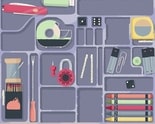
- Sequence puzzles, like arranging crayons into a specific rainbow order
What “Keep Away” and Other Cat-Specific Puzzles Actually Test
Beyond the interruption gimmick, Fitz shows up in smaller ways throughout the game — brushing past a finished scene, sitting in a spot you need, or simply existing somewhere in frame as a reminder that these are lived-in rooms rather than sterile puzzle boards.
The very last puzzle in the game leans on this directly, tied to an achievement called Harmonized Purr that asks you to pet Fitz with no mistakes, a quiet, almost sentimental capstone after dozens of levels spent tidying other people’s mess.
Achievement hunters treat the Fitz-specific levels as their own mini-track within the broader completion list, separate from the tidying puzzles proper, and it’s one of the more frequently discussed threads among players comparing notes on which levels gave them the most trouble.
Multiple Solutions, One Correct Feeling: How Flexibility Works in A Little to the Left
Not every level in A Little to the Left has a single fixed answer. Some accept several valid arrangements as long as the underlying logic — grouped by size, alternating by color, whatever the scene is quietly testing — holds up, and the game moves you forward the moment any of them clicks into place.
That flexibility is deliberate rather than a bug players stumbled into. It keeps the tidying feeling personal, since two players can screenshot the same “solved” shelf looking noticeably different from each other and both be correct.
Where it gets divisive is on levels that look flexible but actually aren’t — a scene might accept three arrangements out of what feels like a dozen reasonable ones, and hitting that invisible wall after guessing wrong a few times is a common frustration players mention when a level takes longer than expected.
The Achievement Chase and the Slow Climb Toward Rainbow-Order Crayons
One mid-game level asks you to place a set of crayons in rainbow order, tied to an achievement often called Draw Me a Rainbow, and it’s a good example of how the game hides a fairly strict, specific answer inside what looks like an open sorting task.
With over fifty achievements spread across the base game, chasing full completion turns A Little to the Left from a short relaxing session into a much longer project, especially once a player starts hunting for the handful of levels with hidden or secondary solutions rather than just the first one they find.
Most players never plan to 100% the game going in, but the same low-pressure tone that makes the early chapters pleasant tends to be exactly what pulls people back in for the achievement chase later.
Is A Little to the Left relaxing or genuinely difficult?
Both, depending on the level. The core tidying loop is calm and forgiving with no time pressure, but individual puzzles — especially symmetry levels and the ones involving Fitz — can genuinely stump players for long stretches without ever feeling unfair.
How many chapters does A Little to the Left have?
The base game is split into five chapters, starting with Home Sweet Home and growing steadily more demanding as new puzzle types like symmetry and sequencing get introduced alongside the earlier stacking and color-matching basics.
What does the cat actually do in A Little to the Left?
Fitz periodically disrupts finished puzzles, most notably on the level tied to the Keep Away achievement, and appears throughout the game as a recurring presence that culminates in the final Harmonized Purr puzzle, where the goal is simply to pet him without a mistake.
A Little to the Left never raises its voice to teach you anything — it just keeps handing you another shelf, another drawer, another scattering of crayons, and trusts that the same instinct that solved the last one will carry you into the next, right up until Fitz and his last quiet purr close the whole thing out.