

















Another Girl In The Wall



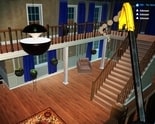






The load screen in Another Girl In The Wall shows a handful of interface buttons before anything resembling a level ever appears. That is the most honest starting point for describing this build: what loads is thin, mostly a shell of menu prompts rather than a fleshed-out horror scene, and it stays that way. This is not a case of a slow-burn game easing you in; the game simply does not offer much beyond its opening screen, and treating it as a short, minimal horror curiosity rather than a full experience is the fairest way to approach it.
What Actually Loads in Another Girl In The Wall
Enclosed-space horror as a genre usually leans on a few dependable tools: tight corridors, something unseen moving nearby, a slow build toward a single scare. Another Girl In The Wall gestures at that setup through its title and opening interface, but the game rarely gets past the buttons on the first screen to deliver on any of it. Players who click through expecting a level to open up are instead met with more prompts, and the sense of an unfinished shell is hard to shake.
Most people’s first mistake is assuming a stalled prompt is their own error rather than the state of the build itself. Trying to restart or refresh rarely changes what comes up next. Early on, the interface buttons respond the same way they do twenty minutes later, since there is no real progression to speak of, and no difficulty curve because there is barely a level to apply difficulty to.
What players who spend any real time with it tend to agree on is that the interface buttons themselves are the one consistent, reproducible part of the game. Community chatter around builds like this one usually settles on calling them “broken” or “stalled” rather than describing any actual scare, which is a fair and honest way to talk about it. That criticism is not unfair; it is simply what the build supports.
Approaching Another Girl In The Wall Without False Expectations
Casual browsers looking for a two-minute jump scare between other games are the ones least likely to feel let down here, since they arrive with low expectations already. Once you stop expecting a wall-crawling threat to actually appear and start treating the screen itself as the whole encounter, the experience makes more sense as a curiosity than as a game with a beginning, middle, and end.
Horror completionists hunting for a specific scripted moment are the ones most likely to walk away frustrated, since there is no scripted moment reliably reachable behind the interface buttons. Search around and the discussion is short: people asking whether the level ever loads and whether the game is simply unfinished. Nothing behind the interface changes no matter how many times the page reloads.
The honest answer to what happens after the interface buttons is: not much, and that gap between the horror-tinged title and the thin build behind it is the real story of Another Girl In The Wall, more than any invented threat or room ever could be.