











Tiny Bunny New Version








What happens when Bunny stops looking like an animal and starts wearing a face you recognize? That question sits at the center of Tiny Bunny New Version, a black-and-white horror visual novel where a shapeshifting presence and a pack of forest creatures called the Beasts pick apart a snowbound village. Players guide Anton Petrov through a remote settlement surrounded by forest, and the game never lets the dread stay abstract for long.
| Genre | Horror visual novel |
| Main Character | Anton Petrov |
| Core Mechanic | Branching dialogue choices |
| Setting | Remote forest village in winter |
| Endings | 20 distinct endings |
| Episodes Available | Four, with a fifth planned |
Twenty Endings: How Choices Branch Inside Tiny Bunny New Version
New readers underestimate how far one dialogue choice can carry. Decisions get tracked across scenes rather than resolved right away, so a line picked while talking to Olya in episode one can quietly reroute a conversation two chapters later. With 20 distinct endings on record, branching is the structure the whole plot is built around.
Beginners often treat early choices as flavor text and rush past them. That habit backfires once the forest starts testing what Anton actually believes about the people around him.
- Choices tied to trust in specific characters carry more weight than choices about exploration
- Some branches only open after a prior scene is replayed differently
- Neutral-sounding responses can still lock out entire later scenes
That density mostly appeals to readers already comfortable replaying long dialogue stretches rather than skipping straight to new content.
Anton and Olya’s First Winter in the Village
Anton Petrov moves to the village with his family, and his younger sister Olya notices things before he does. She flinches at an owl outside the window, and her reactions work as a quiet barometer for how much danger is nearby. That sibling relationship gives the horror a domestic anchor instead of leaving Anton isolated.
Winter functions almost like a countdown as rumors pile up: voices from the treeline, prints matching no known animal, and a growing number of missing-child posters.
Players expecting a straightforward slasher structure usually adjust by episode two. The family drama and the supernatural threat turn out to be wound together rather than kept separate.
The Beasts: Faces That Change Every Time You Look
The Beasts are the game’s monster roster, except there is no fixed design to memorize. Anton perceives them differently by scene: sometimes as animal shadows, sometimes as children in costumes, sometimes as half-rotted stuffed animals, sometimes as a corpse wearing fur. That inconsistency is deliberate and heavily discussed.
Bunny, the entity the game is named after, stands apart by reading what a person wants most and shaping itself to match it.
Discussion around this cast splits between readers who find the shifting designs unsettling and readers who find the ambiguity frustrating when they want a clear answer.
Why the Owl Scene Trips Up First-Time Players
Early scenes are deceptively calm, and the owl sequence is the first real gut-check. Olya’s fear of it reads as a small character beat on a first playthrough, but returning readers usually catch that the moment is foreshadowing dressed up as a slice-of-life detail. That is the pattern beginners get wrong throughout: treating quiet scenes as filler when the story is seeding information it calls back later.
Because the plot is non-linear, missing a small cue can cost an entire branch, not just a jump scare. Readers who blitz through dialogue often end up confused later about why a certain ending triggered.
Slower, more attentive readers tend to get more out of the mystery. Noticing contradictions between what characters say and how they behave around Anton consistently pays off later on.
Reading Route Branches Without a Walkthrough
Once players realize how many routes exist, the temptation to consult a guide is strong, but going in blind is part of what the community values most about a first run. Route-tracking works less like a flowchart and more like a web.
Save-scumming before major decisions is common among completionists chasing all 20 endings, and the community treats it as legitimate rather than as cheating.
By the later reveals, most readers stop predicting outcomes and start paying closer attention to tone instead. Danger gets telegraphed through atmosphere shifts more than through explicit warnings.
The posters scattered through the village mark one of the clearest tension curves in the game. Early on there are only a handful, background noise Anton barely comments on. By the time you reach the village’s central square in later chapters, the number has grown enough that characters stop ignoring it.
This escalation mirrors how the Beasts themselves grow more active as winter deepens. Environmental storytelling stays tied to the seasonal setting instead of feeling cosmetic.
Newcomers sometimes expect a sudden spike in horror content. Pacing instead builds pressure gradually across the whole runtime.
The Black-and-White Art Style That Defines Tiny Bunny
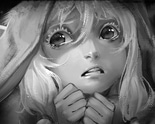
The hand-drawn black-and-white art is one of the first things people mention when describing Tiny Bunny to a friend, and it does real narrative work beyond aesthetics. Stripping out color makes the handful of moments where something looks slightly wrong, a face held too long, a shape in the treeline, land harder than in a fully rendered art style.
The original score leans on quiet, unsettling motifs rather than jump-scare stingers. Long stretches of near-silence make the rare moments it does swell feel disproportionately loud.
Players consistently bring up one detail from real playthroughs: ambient forest sound cutting out entirely right before a Beast encounter.
Community Debates Over the Story’s Fourth Episode
Not every part of the reception has been smooth. A recurring point of debate is a major twist introduced later in the story, which some readers feel recontextualizes earlier chapters in a satisfying way and others feel undercuts the mystery they had been piecing together themselves. It is one honest thing to say about Tiny Bunny: the story takes a real risk with that turn, and not everyone in the fanbase is on board.
Some fans argue the twist pulls the tone too far from the slower dread of earlier chapters, while others treat it as the moment the story finally commits to answering questions it spent hours setting up.
That disagreement has not slowed interest in the unfinished fifth episode.
Experienced readers chasing every ending keep manual notes on prior choices, since there is no in-app choice log. Speedrunners treat this bookkeeping as essential once the branch count climbs past a handful of routes.
Casual readers who just want the strongest version of the story generally focus on trust-related choices with Olya and other named characters. Those choices tend to gate the most significant scenes.
Horror fans drawn in mainly for atmosphere often skip route-optimizing entirely and let the story fall where it falls.
How many endings does Tiny Bunny have?
Tiny Bunny New Version currently has 20 distinct endings, reached through branching choices that accumulate across episodes rather than resolving in a single decision. Reaching all of them typically requires multiple playthroughs and manual tracking of earlier choices involving Anton, Olya, and the Beasts.
Who or what is Bunny?
Bunny is the shapeshifting entity the game is named after, distinct from the wider group of forest creatures known as the Beasts. It reads a person’s deepest desires and shapes itself to match what they want, which is why its appearance changes by who is looking at it.
Is the story finished?
Not yet. Four episodes are currently available, covering Anton’s arrival through the escalating disappearances tied to the Beasts, with a fifth episode still in development.
Tiny Bunny New Version earns its reputation less from cheap scares and more from making a reader complicit in Anton’s slow realization that the village, the Beasts, and Bunny were never separate problems. Anyone who sits with all four episodes will notice how much of the horror was hiding in Olya’s small reactions.